

Contents
- • Introduction
- • The importance of conveyors
- • Benefits of conveyors
- • Main conveyor components
- • Types of conveyors used in mines
- • Applications
- • Economic benefits of mining conveyors
- • Key considerations when choosing a mining conveyor
- • Main factors affecting mining conveyor prices
- • Conveyor maintenance and repair
- • Common mining conveyor problems
- • The future of mining conveyors
- • Comparing conveyors with mining trucks
- • Conclusion and summary
Introduction
After agriculture, mining was the first technology developed by humankind. It remains one of the world’s most important industries and the starting point of production chains in many major sectors. Moving enormous volumes of minerals has always been a central challenge, requiring powerful, reliable equipment. In the distant past, enslaved people, workers and animals supplied the muscle power. With the invention of engines, trucks and other machinery took over. This equipment was costly, time-consuming and unreliable because of frequent failures, with high maintenance costs. Today, conveyors play a distinctive role in mineral transport. They can move thousands of tonnes continuously, day and night, at lower cost, higher volume and greater efficiency than other methods.
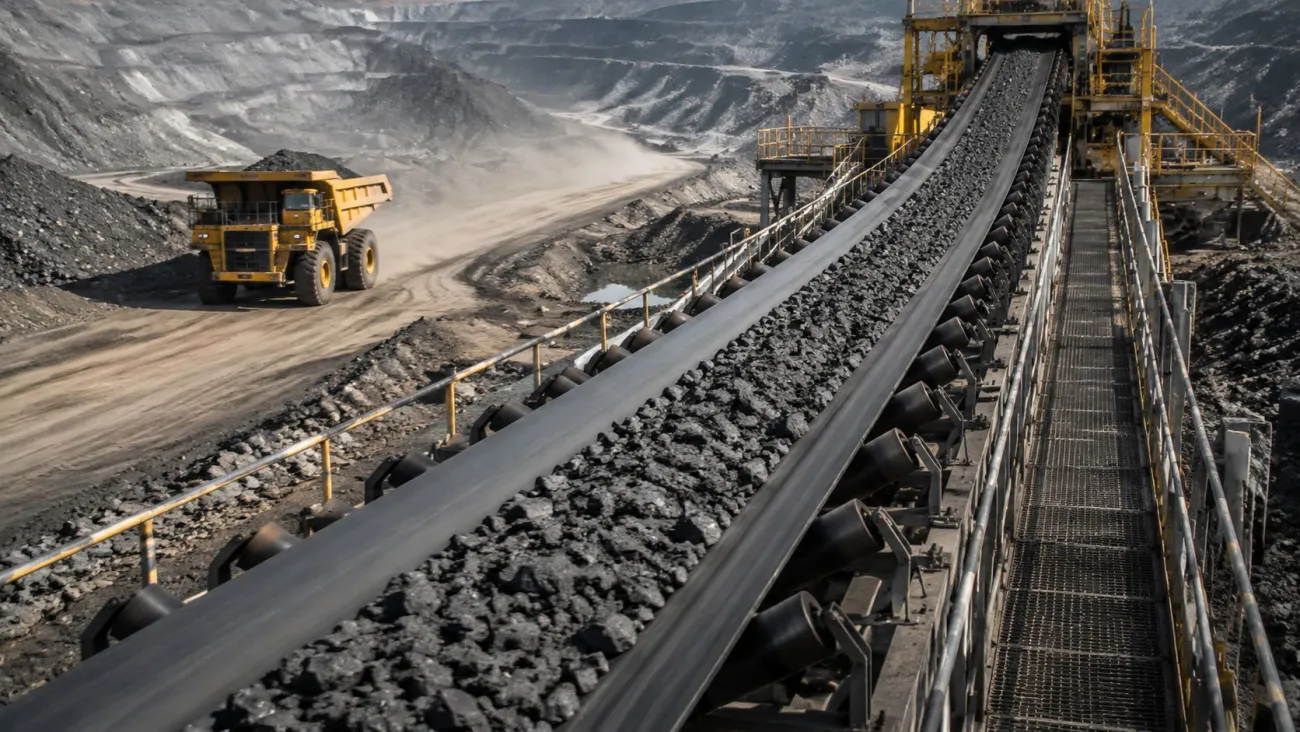
A mining conveyor is an interconnected system of equipment and moving surfaces that transfers minerals from one point to another. An electric motor and drum drive a belt supported by idlers, continuously moving extracted material. These systems can convey copper ore, coal, iron ore, lead, zinc, sand, gravel and other minerals efficiently, quickly and at low cost.
The importance of conveyors
Every economic project seeks to maximise returns from business activity. Lower operating costs create a sound rationale for investment. In mining, material transport accounts for a substantial share of operating costs, becoming more important as extraction volumes rise. A mechanised, continuous and low-cost transport method therefore becomes essential.
Benefits of conveyors
Faster material transfer, lower energy consumption—particularly fossil fuels and the associated pollution—lower transport costs, improved workplace safety, and continuous movement with less noise and dust explain why many large mines use extensive conveyor networks. Besides lowering operating costs, these systems improve safety, reduce equipment wear and enhance extraction and mineral-processing productivity.
Main conveyor components
A continuous conveying system requires coordinated components to operate correctly. Its main components are:
- Conveyor belt: The most important component, on which materials are placed and transported. Mining belts are generally made from rubber highly resistant to abrasion, impact and tearing.
- Idlers: They support and guide the belt. Idler quality directly affects the performance and service life of the entire system.
- Drums (pulleys): Located at the system’s ends, they transmit driving force and guide the belt’s path.
- Electric motor and gearbox: They provide the power and torque needed to move the system. The gearbox changes motor speed and delivers the required torque.
- Chassis and steel structure: The main supporting structure on which all conveyor components and equipment are installed.
Types of conveyors used in mines
Different designs are used according to the terrain and extracted material:
- Conventional belt conveyor: The most common mining type, used to move large volumes over long distances with low maintenance costs.
- Inclined conveyor: Used to transfer materials between different elevations.
- Chain conveyor: Used when the conveyed material is very heavy or the operating environment is exceptionally demanding and harsh.
- Sidewall conveyor: Its corrugated sidewalls prevent spillage when carrying materials up steep slopes.
Applications
These systems play a vital role in different areas of extraction and processing:
- Coal mines: Continuously transporting coal from deep extraction tunnels to surface storage.
- Iron ore and copper mines: Moving heavy extracted rock to crushers, sizing lines and concentration plants.
- Sand and gravel mines: Rapidly moving aggregates through production, sorting and grading lines for construction materials.
Economic benefits of mining conveyors
Studies have shown that, in many mining projects—especially large, high-output mines—the long-term cost of conveyor transport is much lower than truck haulage. This results from lower energy costs, less vehicle fleet maintenance, fewer operators and fewer operational stoppages.
Key considerations when choosing a mining conveyor
Selecting a suitable conveyor requires careful examination of engineering and operational factors. The most important include conveying capacity in tonnes per hour, mineral type and particle size, route length and incline, and environmental conditions such as moisture, dust and ambient temperature.
Main factors affecting mining conveyor prices
Mining conveyor prices vary considerably with route length, belt width and type, idler quality, chassis material, motor and gearbox power, and control equipment.
Conveyor maintenance and repair
Proper maintenance includes daily belt inspection, checking idlers, monitoring belt tension, lubricating moving parts and checking electrical systems.
Common mining conveyor problems
Neglecting proper maintenance causes the following problems:
- Belt misalignment: The most common problem, usually caused by incorrectly adjusted or misaligned idlers.
- Idler failure: Increases friction, electricity consumption and severe belt wear.
- Belt tearing or slipping: Caused by overloading, sharp objects or reduced traction at the drive drum.
The future of mining conveyors
As smart technologies develop, many modern mines use intelligent sensors, online monitoring and remote control. These technologies enable failure prediction before an incident (predictive maintenance), fewer unplanned stoppages and improved productivity across the line.
Comparing conveyors with mining trucks
Choosing between conveyors and mining truck fleets is a key decision in designing mineral transport systems. Each has distinct characteristics, advantages and disadvantages that must be assessed against the conditions of each mine. The following compares them from several perspectives:
| Comparison factor | Mining conveyor system | Trucks and vehicle fleets |
|---|---|---|
| 1. Operating costs | Very low: lower electricity consumption and limited need for operators and drivers | High: continuous fossil fuel demand, many drivers and vehicle component wear |
| 2. Material transport capacity | Continuous 24-hour transport of up to several thousand tonnes per hour, without loading stops | High capacity per load, but lower efficiency because of loading and unloading time |
| 3. Route flexibility | Low: designed for fixed routes, which take time to change | Very high: roads and routes change as extraction locations move |
| 4. Workplace safety | High: eliminates heavy machinery traffic and reduces risks to people in the mine | Challenging: heavy vehicle traffic always presents accident risks |
| 5. Transport inside tunnels | The best solution: not constrained by space and compatible with elevation changes and steep inclines | Practically impossible or difficult in narrow tunnels; requires space and specialised wagons |
| 6. Environmental impacts | Lower: less and cleaner energy consumption, with much less dust | High: substantial pollutant emissions and continuous road dust |
| 7. Initial investment | High: substantial initial installation and equipment costs, recovered over the long term | Lower for small projects: buying a few trucks costs less initially |
Conclusion and summary
Mining conveyors are vital material handling equipment that reduce costs, improve productivity and enhance safety. Selecting them correctly requires careful assessment of capacity, mineral type, environmental conditions and equipment quality. Investing in a high-quality conveyor with current technology can substantially improve a mine’s long-term profitability. For mines with high extraction volumes, long lives and fixed haulage routes, conveyors are generally the most economical option and can significantly reduce operating costs. However, trucks remain suitable for small mines, temporary projects or locations where extraction areas change continually. Many large mines use both systems together to achieve maximum productivity.